
Buffalo Neighbors by Block
Public records around a Buffalo address are parcel-centered. The GIS map is the starting point for the lots that touch or sit near the target parcel. The City property card and Erie tax data can confirm owner and correspondence fields. The Clerk confirms recorded transfers. Civic organizations offer public contact routes, not a household directory. None of these sources verifies an automatic list of everyone living near an address.
| Source | What It Shows About a Block | Access |
|---|---|---|
| Erie GIS Parcel Viewer | Target and adjacent parcels, SBL/PIN, owner, mailing, dimensions, and map context. | Free public viewer; map lines are illustrative. |
| Buffalo property card / Erie parcel search | Owner, situs, tax mailing address, transfer and parcel leads. | Public address or owner search. |
| Erie County Clerk | Recorded deed parties, dates, instrument data, and legal description. | Online index, terminal, counter, or request channel. |
| Erie voter FOIL | Permitted election-file fields within requested geography. | FOIL request with elections-purpose limit. |
| Block clubs and planning layers | Public meeting, planning, and contact context. | Contact route or planning map, not a member roster. |
Parcel ownership is not the same as occupancy. A mailing address may point to a trust, an estate, a company, or an owner who lives elsewhere. Treat it as correspondence information until another dated, independent record supports a narrower conclusion.
Map a Buffalo Neighbor Block
The Erie GIS workflow moves outward from one known parcel. Search the exact address or SBL, locate the target polygon, and use the surrounding parcel lines to distinguish side, rear, and front parcels. There is no verified automatic radius or resident-neighbor list in the official material. Map browsing is the documented method.
- Search the target in the Erie County Parcel Viewer with the full address or known SBL. Confirm the address number and street before using the selected polygon.
- Zoom to the block and click each adjacent parcel. Record the SBL/PIN, address, owner field, mailing field, and deed date for the parcels that matter to the question.
- Compare the City property card or Erie parcel result when a field needs confirmation. Keep the situs address distinct from a tax mailing address.
- Use the SBL, a party name, or a book/page reference at the County Clerk for a recorded ownership check. For a full named-street chain, use the Buffalo street directory workflow.
This one-address-to-adjacent-parcel flow produces a transparent chain. It also makes it clear which result came from a map field, a property roll, or a deed record.
Buffalo Neighbor Parcel Fields
The Erie County Parcel Viewer supports address, owner, and SBL searches. Its parcel popup can return PIN, SBL, address number and name, narrative fields, frontage, depth, assessed and calculated acreage, class, property type and description, owner 1 and 2, mailing address 1 and 2, street, city, ZIP, ZIP4, school area, school district, deed date, and roll. The popup is a useful Buffalo neighbors record because it ties a mapped lot to named property fields.
The Erie County Parcel Viewer shows the parcel layers and adjacent-polygon context used for a Buffalo neighbors search.
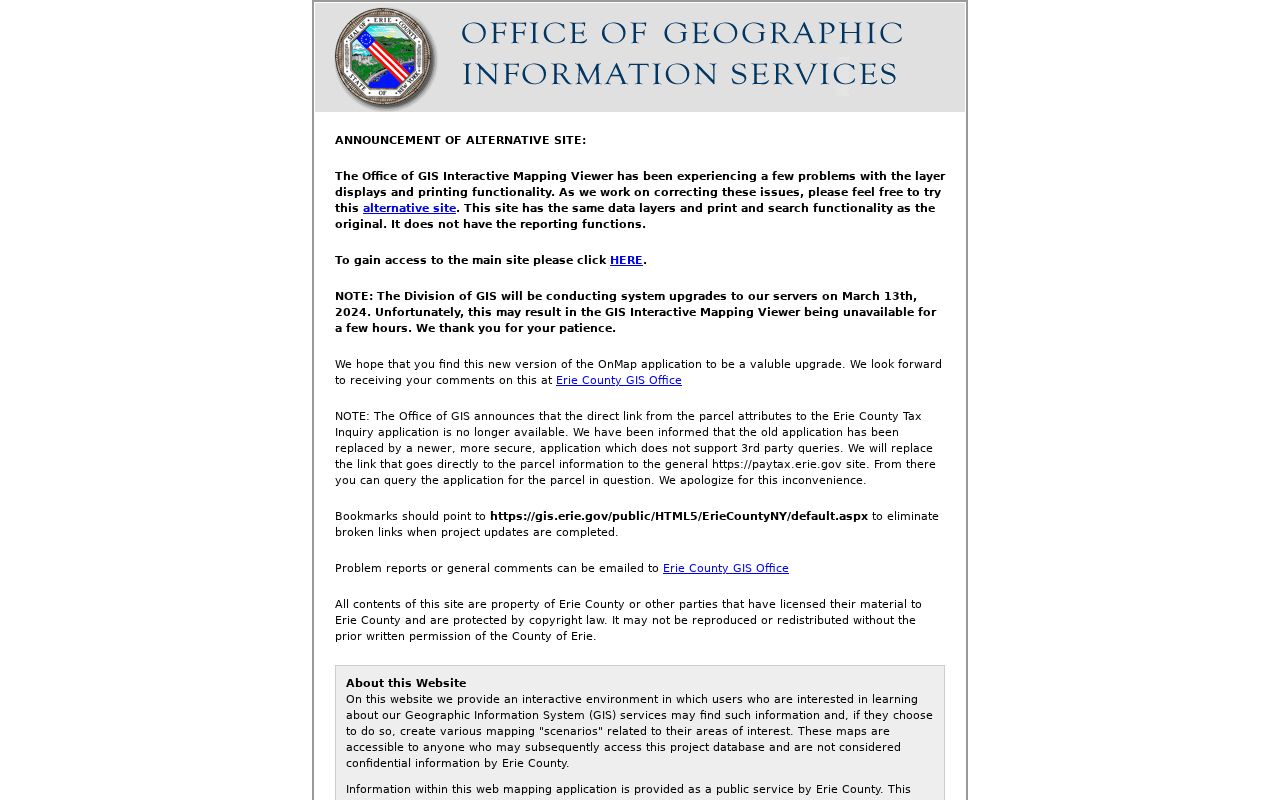
The county says its parcel layer is current to 2025, but does not guarantee the update cadence. Coordinates, parcel lines, and attributes are illustrative rather than a legal survey. Use the appropriate office for boundary or ownership questions that need a formal answer.
Note: A map popup is a strong parcel lead, but it should be checked against the property or Clerk record when precision matters.
Buffalo Neighbor Ownership Checks
After the map yields a parcel, the Erie Clerk Browser View can search a party, document type, instrument number, book/page, map number, parcel ID, or date range. The Clerk does not support an ordinary address search. Use the parcel/SBL to find a party or book/page lead, then read the deed’s grantor, grantee, recording date, and legal description. The online land index starts in 1986, deed images start in 1960, and deeds are maintained from 1808. Earlier material may require the Graves index, books, microfilm, a public terminal, or a written request.
Erie Property Alert is a free account service for recording notifications tied to exact SBLs and/or party names. It begins after registration and does not provide a historical deed index or prevent fraud.
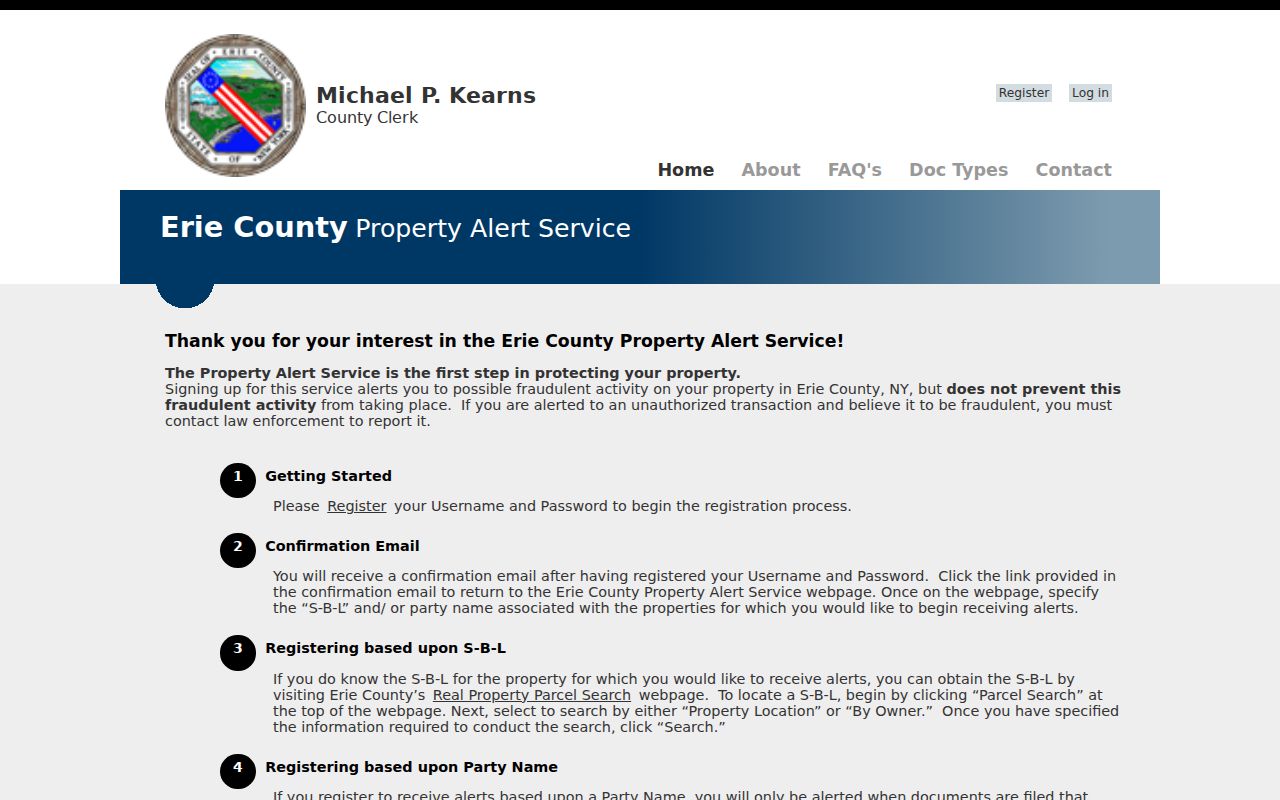
A notification can prompt a follow-up Clerk search after a new document is recorded. It does not establish who lives on the block, and it should not replace a deed or parcel review.
Buffalo Neighbor Voter FOIL Boundary
There is no unrestricted Erie County public name-and-address voter lookup. The Board of Elections information and records page directs requests to the county FOIL process. The form allows Town, Ward, or District geography; party choices; requested fields such as address, phone, date of birth, gender, geography, and voting history; and sorting by geography, address, or name. Available format choices include paper, electronic, Excel, DBF/CSV, maps, and enrollment-list options.
That detail does not make a voter file a general block directory. Election Law §3-103(5) requires an elections-purpose statement, and confidential voter registration under Election Law §5-508 withholds actual addresses from ordinary public records. Ballot choices are not voter-file fields. File-maintenance status can also change, so a missing or inactive record proves very little about a person’s relationship to a parcel.
Note: A voter-registration or update form is for the voter’s own record, not a public Buffalo neighbors search.
Buffalo Neighborhood Map Labels
Buffalo’s official planning map uses 35 neighborhood labels, including Riverside, Black Rock, North Park, Parkside, University Heights, Allentown, Fruit Belt, First Ward, Lovejoy, Kaisertown, Seneca-Babcock, and South Park. These labels help add local context to a block. They are not parcel boundaries, ZIP boundaries, or an address directory. Confirm municipality, parcel, and ZIP separately when an address has a Buffalo postal label.
Erie County’s map gallery shows the map and parcel-report context that can support Buffalo neighborhood and ZIP research.
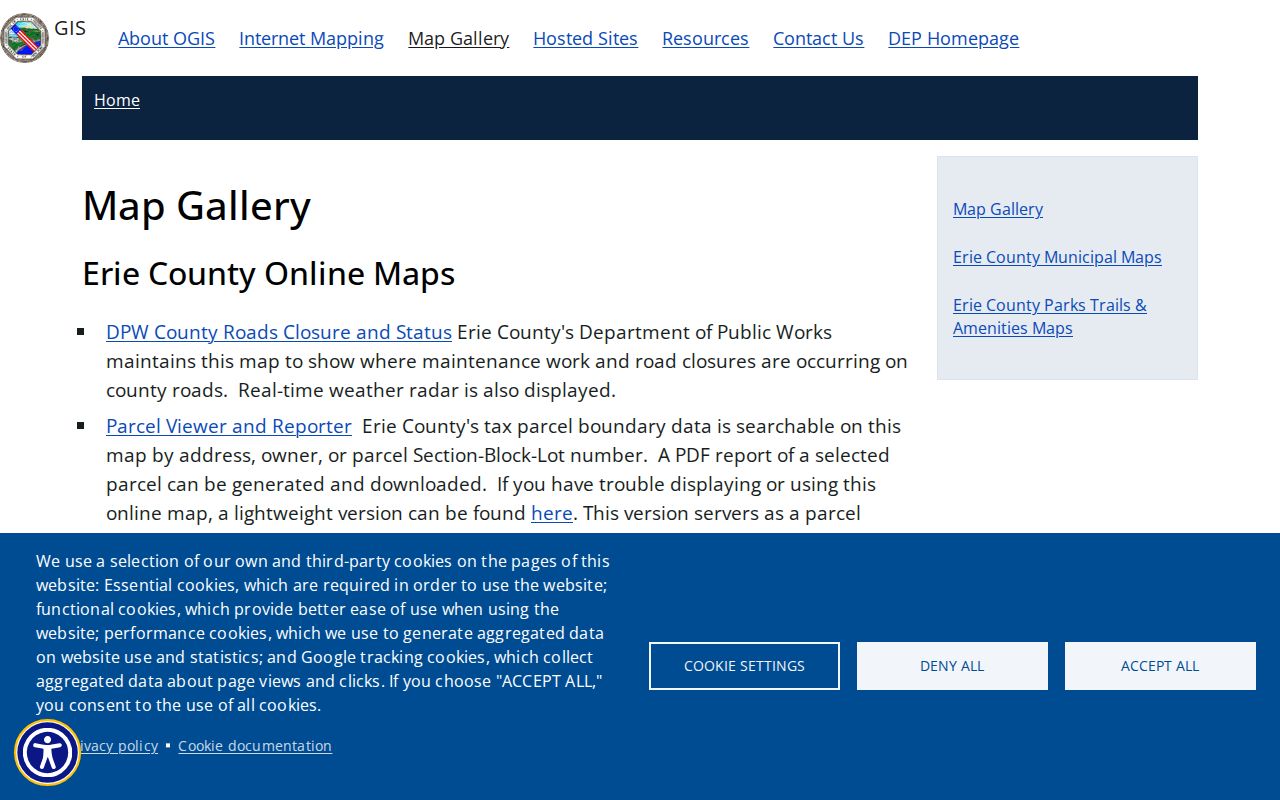
Planning labels are useful for describing an area, but a target parcel can only be confirmed through the parcel and assessment systems. The map layer should guide a check, not settle jurisdiction by itself.
Note: A Buffalo postal label and a Buffalo City parcel are separate facts that need separate verification.
Buffalo Block Club Contacts
Community organizations provide a public civic layer around Buffalo neighbors without turning private membership into a searchable list. The verified organizations and planning resources below can help find a meeting or understand a neighborhood initiative. They do not publish a household roster.
| Group or layer | Public contact or participation route | Roster limit |
|---|---|---|
| Buffalo Board of Block Clubs | Nonprofit umbrella with meetings on the fourth Thursday, except November and December; contact the board for a location. | It does not release member names, addresses, or phone numbers and is not subject to FOIL for a roster. |
| Block-club registration | Organization may provide bylaws, elected officers, at least six meetings each year, crime-watch training, no fee, and three-year renewal. | Registration shows organizational existence, not a member list. |
| Envision Neighborhoods | 2025 public engagement and meeting layer. | No household directory was located. |
| Congregation and civic collections | Historical material at local library, museum, and genealogical collections. | Current rosters were not located. |
Note: A compiled result can be a lead to verify, but a custodian record is the stronger source for parcel facts.
The Board of Block Clubs is especially useful because it protects member information. Use the public contact route to participate or ask about a meeting instead of trying to infer a private list from the association.
Buffalo Neighbor Civic Context
Envision Neighborhoods reported 2025 citywide engagement involving more than 600 residents and dated neighborhood meetings. That is evidence of a public participation layer, not proof that a participant is connected to a particular parcel. The Hamlin Park and Masten Park Legacy Cities Community of Practice work, begun in January 2023 with city, BENLIC, BURA, Canisius, and associations, is another example of neighborhood context rather than a resident register.
For older block research, the WNYGS 1865 Erie census index can be useful, but its Buffalo coverage is uneven. Wards 1 through 6 are complete, Wards 7, 8, 10, and 11 are partial, and Wards 9, 12, and 13 are unavailable. A missing historic result can therefore be a collection gap rather than evidence that no one lived there.
Buffalo Neighbor Record Comparison
Official sources and commercial compiled neighbor tools serve different purposes. A commercial category may combine address and marketing data, which can be stale, merged across same-name people, or hard to correct. For a block question, the parcel map, property record, Clerk index, and public civic contact route leave a clearer trail back to a custodian.
| Record category | Useful for | Do not assume |
|---|---|---|
| Official parcel, property, and deed records | Parcel identity, owner fields, and recorded transfer history. | That an owner or mailing address identifies every occupant. |
| Voter FOIL records | Lawful election-purpose requests within the chosen geography. | That a general public block lookup is available. |
| Commercial compiled neighbor tools | Possible leads to verify independently. | That the result is current, complete, or tied to the right person. |
| Association contact routes | Meetings and public civic context. | That a member roster is public. |
Buffalo Neighbor Privacy Limits
Public parcel records do not reveal all non-owner household members or current occupants. Utility accounts, delivery lists, DMV data, protected voter addresses, actual addresses protected through the New York Address Confidentiality Program, sealed court details, and private association rosters remain outside a lawful Buffalo neighbors search. Executive Law §108 requires protection of eligible actual addresses, and the DPPA restricts casual access to DMV personal information.
Records can also be incomplete or delayed. A property field, meeting list, or dated deed should be read for its stated purpose and verified with the responsible custodian.
Lawful use. Use Buffalo block records for personal, lawful research, civic participation, family history, or property questions. Do not use them to watch, contact, threaten, expose, stalk, or harass another person.